
 By
By Warehouse efficiency depends on how effectively people, equipment, inventory, and information work together. A process that appears small, such as measuring a shipment, can have a substantial impact when repeated hundreds or thousands of times. Manual dimensioning can consume labor and create inconsistencies, especially when freight varies significantly in size and shape. Freight dimensioning systems provide an automated approach that can make this stage of warehouse operations faster and more dependable.
These systems are designed to capture freight measurements and provide usable information to downstream logistics processes. By combining measurement technology with software integration, businesses can transform dimensional data into an operational resource rather than treating it as a simple measurement task.
Understanding Automated Freight Measurement
Traditional freight measurement generally involves employees using tape measures, rulers, scales, or other manual tools. While these methods are straightforward, they can become inefficient in high-volume environments.
Automated dimensioning uses sensors or imaging technologies to identify the physical boundaries of freight. Depending on the system, measurements can be captured while packages are stationary or moving through a designated scanning zone.
This approach can reduce repetitive tasks and help standardize how dimensional information is collected throughout a facility.
How Dimensioning Supports Warehouse Productivity
Productivity is not simply about moving more packages. It is also about minimizing unnecessary work and ensuring information is available when employees need it. Freight dimensioning systems can help by reducing the amount of manual effort required to collect shipment dimensions.
When measurements are automatically recorded, employees can focus on activities that require greater judgment, such as handling exceptions, verifying documentation, or preparing unusual shipments.
Reducing Repetitive Manual Tasks
Automated measurement can make routine workflows more predictable. Employees do not need to repeatedly measure every package using separate tools, record numbers manually, and enter the same information into another system.
This can create a smoother process from packing to dispatch. The exact workflow will depend on the facility and technology selected, but automation generally works best when it is designed around existing operational requirements.
Supporting Inventory and Storage Planning
Dimensions are valuable beyond shipping. Warehouse managers can use accurate measurements to make more informed decisions about inventory storage and product placement.
For example, products with similar physical characteristics can be grouped more efficiently, while unusually large items can be directed toward locations designed to accommodate them. This can help reduce inefficient use of storage space.
Freight dimensioning systems can provide the dimensional information necessary for these decisions. When measurement data is connected to inventory records, warehouse teams gain a more complete understanding of the physical characteristics of their stock.
Improving Shipping Preparation
The shipping department often operates under significant time pressure. Packages need to be measured, labeled, documented, and assigned to the correct transportation route. Delays in one stage can affect the entire outbound process.
Automated dimensioning can help standardize measurement before freight reaches the loading area. Reliable information can support shipping documentation and provide useful data for carrier and transportation planning.
A streamlined process can also make it easier to identify packages requiring special handling because of their dimensions.
Using Data to Improve Operations
Modern warehouses increasingly rely on data analytics to identify inefficiencies. Dimensional information can become another useful data source for this process.
Managers can examine shipment dimensions to identify trends, such as recurring oversized packages, inefficient packaging, or products that frequently require special handling.
Freight dimensioning systems can contribute to these insights by producing structured dimensional information instead of isolated manual measurements. Over time, this data may help businesses identify opportunities to improve packaging, storage, transportation, and workflow design.

Preparing Warehouses for Greater Automation
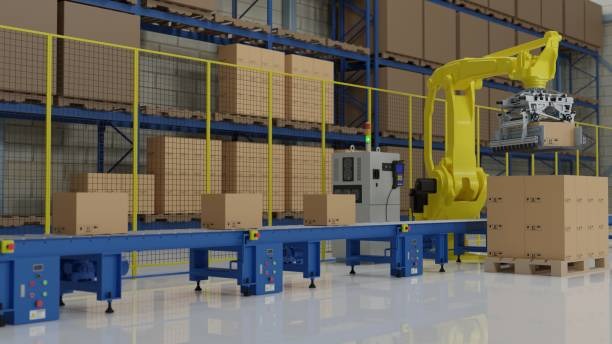
Automation is becoming an important part of warehouse modernization. Conveyors, automated storage systems, robotic equipment, scanners, and software platforms increasingly work together as connected systems.
Dimensioning technology can become part of this ecosystem by providing machines and software with information about freight characteristics. This can help automated processes determine routing, handling requirements, or appropriate storage options.
The value comes not simply from measuring freight but from making the resulting information available throughout the operational network.
Conclusion
Efficient warehouse management requires reliable information at every stage. Manual measurements can become a bottleneck when shipment volumes increase, while inconsistent data can affect storage and shipping decisions. Freight dimensioning systems offer an automated solution for capturing important shipment characteristics with greater consistency.
From warehouse productivity and inventory planning to shipping preparation and digital integration, dimensioning technology can support several areas of logistics performance. Businesses evaluating warehouse automation should consider how dimensional data can fit into their broader operational strategy and technology infrastructure.
