 By
By Anyone responsible for managing a team or a facility has probably asked this question at some point. Understanding the process behind evaluating workplace hazards is the first step toward building a safer, more compliant operation. While the specifics can vary by industry, the general framework remains fairly consistent across most businesses.
Why This Process Matters
Before diving into the steps, it helps to understand the purpose behind this kind of evaluation. The goal is to identify hazards before they cause harm, rather than reacting after an injury or incident occurs. This proactive approach protects employees, reduces legal exposure, and often uncovers inefficiencies that go beyond safety alone, such as poorly organized workflows or outdated equipment.
Regulatory bodies in many industries require documented evidence that businesses have identified and addressed potential hazards. Without this documentation, companies can face fines or increased liability if something goes wrong.
Step One: Identify The Hazards
The process begins with a thorough walkthrough of the workplace to spot potential sources of harm. This includes obvious dangers like exposed machinery or chemical storage, as well as less visible risks such as poor lighting, ergonomic strain, or fatigue from long shifts. Talking to employees is often one of the most valuable parts of this stage, since the people doing the work every day usually know where the real problems are, even if those issues have never been formally reported.
Hazards can fall into several categories, including physical, chemical, biological, ergonomic, and psychosocial. A complete evaluation looks across all of these areas rather than focusing narrowly on the most visible risks.
Step Two: Determine Who Might Be Harmed
Once hazards are identified, the next step is figuring out who is exposed to them and how. This might include full time employees, temporary workers, visitors, or contractors. Different groups may face different levels of exposure depending on their role, so it is important to think through each scenario individually rather than applying a blanket assumption across the entire workforce.
This step also considers vulnerable groups, such as new employees who may be less familiar with procedures, or workers with health conditions that could increase their risk in certain environments.
Step Three: Evaluate The Risks
After identifying hazards and the people affected, businesses need to evaluate how likely each hazard is to cause harm and how severe the outcome could be. This is often done using a simple scoring system that combines likelihood and severity to prioritize which risks need immediate attention versus which can be monitored over time.
This step helps businesses allocate resources efficiently. Not every hazard requires the same level of investment to address, and a structured evaluation prevents companies from either overreacting to minor issues or underestimating serious ones.
Step Four: Implement Control Measures
With risks ranked by priority, the next step is putting measures in place to reduce or eliminate them. This can range from simple fixes, like improving lighting or reorganizing storage, to more involved changes, like installing safety guards on machinery or revising entire workflows. The most effective controls often follow a hierarchy, starting with eliminating the hazard entirely, followed by substitution, engineering controls, administrative changes, and finally personal protective equipment as a last line of defense.
This is often where businesses benefit from outside expertise. A professional conducting a workplace risk assessment brings experience across many different environments and can recommend control measures that have proven effective elsewhere, rather than relying solely on trial and error.
Step Five: Document Everything
Thorough documentation is essential, both for regulatory purposes and for internal tracking. Records should include what hazards were identified, who is affected, the risk level assigned, and the specific measures taken to address them. This documentation becomes a reference point for future assessments and provides evidence of due diligence if a regulator or legal inquiry ever requires it.
Good documentation also helps new employees understand existing protocols quickly, since they can review past assessments rather than relying entirely on verbal instruction.
Step Six: Review And Update Regularly
Workplaces change constantly. New equipment gets introduced, processes evolve, and staff turnover brings in people unfamiliar with existing procedures. Because of this, a risk assessment is never truly finished. Most businesses schedule formal reviews at regular intervals, and additional reviews should happen anytime there is a significant change in operations, a new incident, or feedback from employees suggesting a previously unnoticed hazard.
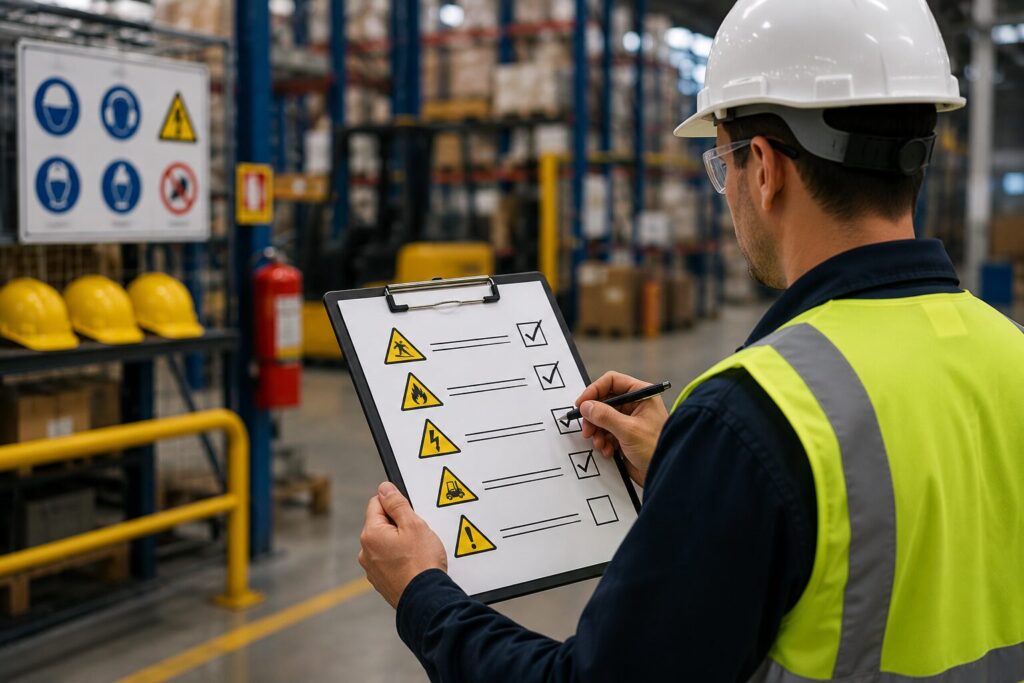
How Can Professional Consultants Help With Workplace Risk Assessments?
Managing workplace risks can be challenging, especially for businesses with complex operations or limited internal safety resources. Professional consultants can provide valuable expertise by evaluating workplace conditions, identifying compliance gaps, and recommending practical improvements.
MRA EHS Consulting helps organizations strengthen their safety programs through professional evaluations, customized recommendations, and risk management support. Their team works with businesses to identify hazards, improve safety procedures, and develop strategies that support ongoing workplace protection.
Professional workplace risk assessment services can help companies gain a clearer understanding of potential hazards while creating a structured approach to reducing workplace risks.