 By
By If you’ve started looking into window tint options and found yourself confused by the terminology — VLT percentages, infrared rejection rates, ceramic vs. metalized — you’re not alone. The category sounds straightforward until you’re actually trying to make a decision, and then suddenly there’s a lot to sort through.
This is a plain-language breakdown of Ceramic window tint: what it is, what it does, and what to actually expect from the experience.

What Makes Ceramic Film Different From Standard Tint
The word “ceramic” gets used loosely in the window film industry, which is part of why it’s confusing. True automotive window tint uses nano-ceramic particles — microscopic, non-metallic, non-conductive ceramic compounds — embedded in the film matrix. These particles are what give the film its heat-rejection ability.
Unlike dyed film, which absorbs heat (and eventually breaks down as the dye degrades), ceramic film blocks infrared radiation — the part of the solar spectrum responsible for heat — before it can enter the cabin. Unlike metalized film, which reflects heat using tiny metal particles, ceramic film does this without any conductivity. That distinction matters for modern vehicles loaded with wireless signals, GPS, and radar-based safety systems.
The result is a film that handles heat better than either alternative, doesn’t interfere with electronics, doesn’t fade or discolor, and typically outlasts both.
What “Nano-Ceramic” Means in Practice
Some films marketed as ceramic use a ceramic coating over a standard base rather than true ceramic-particle construction throughout the film. The difference matters in performance and longevity. When evaluating a product, ask whether the ceramic particles are embedded throughout or applied as a surface layer. A reputable installer selling genuine ceramic window tint will know the answer and tell you clearly.
What to Expect From the Consultation
A good window tint consultation should feel like a practical conversation, not a sales pitch. You should leave understanding what film is being used, what VLT percentage makes sense for your situation and local laws, how long installation will take, and what the warranty covers.
If the installer can’t tell you the brand and product line of the film they’re installing, that’s a problem. Film quality varies significantly even within the ceramic category, and the brand matters for both performance and warranty validity.
Questions worth asking before you commit:
What is the infrared rejection percentage of this specific film? What does the warranty cover and is it from the manufacturer or just the installer? How long will the installation take and what’s the curing period? Will this film affect any of my vehicle’s sensors or driver assistance systems?
VLT and What Shade to Choose
VLT — visible light transmission — is the percentage of visible light the film allows through. Higher numbers mean lighter film; lower numbers mean darker film. A 70% VLT film is nearly transparent. A 20% VLT film is quite dark.
Most people’s instinct is to go darker for better heat rejection. That’s actually a misconception with ceramic film. Ceramic window tint rejects heat through its particle composition, not through darkness. A 50% VLT ceramic film can outperform a 20% VLT dyed film on heat rejection while being significantly lighter. This is one of the most practically important things to understand going in.
Legal limits for front side windows in most US states sit between 35% and 50% VLT. Rear windows and rear windshields typically have more flexibility. Check your state before picking a shade — and if you’re uncertain, your installer should be able to tell you immediately.
The Installation Day: What Actually Happens
Installation for a full car typically takes two to four hours, depending on the number of windows, the complexity of the curves, and whether the installer needs to work around defrost lines or sensors carefully.
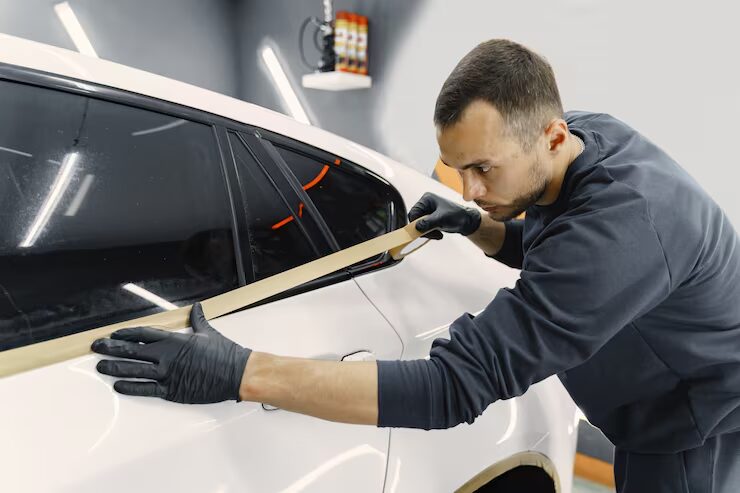
The process involves cleaning the glass thoroughly, cutting the film to exact window dimensions (usually using computer-aided cutting for precision), applying the film with a solution that allows repositioning, and squeegeeing out moisture and bubbles. The film is then trimmed to final fit and left to cure.
The Curing Period
For the first three to five days after installation — sometimes up to a week in cold or humid weather — the film is still curing. During this period, you may notice:
Small water bubbles that look like blisters — these are normal and will evaporate as the adhesive cures. Slight haze when looking through the windows at certain angles. A faint film odor inside the car.
All of these resolve on their own. The key things to avoid during curing are rolling the windows down, washing the car with pressure washers or automatic car washes, and pressing or wiping the inside surface of the tinted glass. Patience here protects the installation.
Common Questions First-Time Buyers Ask
Does tint make it harder to see at night? Lighter VLT films (50% and above) have minimal impact on night vision. Darker films can reduce visibility in low-light conditions. If you do a lot of night driving, avoid going too dark on driver-side windows.
Can I tint just the front windows? Yes. Many people tint only the front side windows for glare and UV protection while leaving rear glass as-is. Mixing tinted and untinted windows is common.
How do I clean tinted windows? Avoid ammonia-based cleaners — they can break down window film over time. Use a gentle, non-ammonia glass cleaner and a soft microfiber cloth. Clean the inside surface gently without scrubbing.
The guidance at Shady Stint covers these questions from a professional standpoint and is worth consulting if you want a clearer picture of the full process before your appointment.
Conclusion
Ceramic window tint is the most technically advanced film category available to consumers, and for most drivers weighing the decision seriously, it delivers on its promises. Heat rejection without darkness, UV protection without signal interference, and longevity that outlasts cheaper alternatives — these aren’t marketing claims, they’re measurable differences you’ll notice from the first summer drive. Going in with the right expectations and the right questions makes the whole experience straightforward. And once it’s done properly, you won’t think about it again for a very long time.