
 By
By Why Dirt Bike Wheels Are the Foundation of Every Ride
Most riders spend hours debating engines, exhausts, and suspension setups. The wheels? They treat them as an afterthought. That’s a mistake that shows up fast on rough terrain.
Dirt bike wheels carry every ounce of force your ride generates, from landings off jumps to tight berm turns in the mud. A wheel that flexes under load or goes out of true after one rocky trail run doesn’t just affect performance; it directly affects control. And control is everything off-road.
Here’s the thing most people miss: the wheel isn’t just the rim. It’s a system. The rim, spokes, hub, bearings, and tire all work together. Weaken one component and the whole system suffers.
What makes a quality dirt bike wheel:
- Double-walled aluminum rims for strength without unnecessary weight gain
The rim wall thickness and spoke tension are what separate a wheel that holds its shape after a gnarly landing from one that warps on the second lap. Brands like Excel and DID have built their reputations specifically on this.
Rim Size, Terrain, and the Real-World Trade-offs
How Rim Size Affects Handling on Dirt Bike Wheels
The standard front wheel size on a full-sized dirt bike is 21 inches, paired with an 18 or 19-inch rear. That sizing isn’t arbitrary. A taller front wheel rolls over obstacles more smoothly, maintains forward momentum through rough patches, and gives the rider better steering feedback at speed.
Drop to a smaller front rim, say 19 inches, and you get quicker, sharper steering. That’s why some motocross setups prefer it. But you lose some of that float over rocks and roots that makes trail riding feel manageable.
Pro Tip: If you ride both motocross tracks and trail terrain, stick with the 21-inch front. It’s the more forgiving choice across mixed surfaces and works with a wider range of knobby tire profiles.
The rear wheel is where load management happens. An 18-inch rear handles most off-road tires well. A 19-inch rear is more common on motocross-specific bikes because it pairs better with the stiffer, low-profile tires those riders prefer for track conditions.
When Spoke Count and Tension Actually Matter
A standard dirt bike wheel runs 36 spokes. That number isn’t set in stone, but it’s been proven across decades of off-road riding. More spokes mean more load distribution. Less flex. Better resistance to lateral impact.
What riders often overlook is spoke tension. Even a quality rim becomes a liability if the spokes are unevenly tensioned. A wheel that’s visually straight can still pull left under load if the tension is off. Check spoke tension every few rides if you’re riding hard terrain. This is a maintenance habit that separates riders who replace wheels every season from those who get years out of a single set.
Pit Bike Wheels: Small Size, Serious Engineering
Pit bike wheels operate on a completely different scale. Most pit bikes, including popular models built around the CRF50 platform, run 10-inch or 12-inch wheels. Some larger pit bikes step up to 14 inches, particularly those intended for older or taller riders.
The smaller diameter isn’t a compromise. It’s intentional. Pit bikes are designed for close-quarters racing, beginner skills training, and paddock fun where tight, responsive handling matters far more than obstacle clearance. A 10-inch wheel responds instantly to rider input in a way a full 21-inch front simply can’t match at low speeds.
Here’s where it gets interesting. The engineering that goes into quality pit bike wheels is surprisingly close to what you’d find on full-sized machines. Aluminum alloy rims, stainless steel spokes, sealed wheel bearings, and precision hubs are standard on any pit bike wheel worth buying. The scale changes; the standards don’t.
For example, a rider stepping up from a 110cc pit bike to a 150cc machine will likely move from a 12-inch to a 14-inch wheel setup. That extra two inches of rim diameter changes the tire profile, alters ground clearance slightly, and shifts the bike’s geometry enough to feel noticeably different through corners.
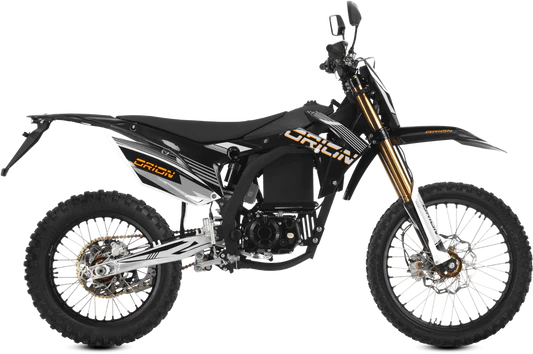
If you’re sourcing quality replacements or upgrades, Orion Moto carries a solid range of both pit bike wheels and full-sized off-road wheel components worth looking at before you buy.
Tube-Type vs. Tubeless: Which Setup Works for Off-Road Riding
Dirt bike wheels traditionally run tube-type tires. That’s still the case for most off-road and motocross applications. Tubes allow the tire to run at lower pressures, which increases the contact patch with the ground and improves traction on loose surfaces.
Tubeless setups are gaining ground, particularly in hard enduro and adventure riding circles where a flat far from civilization is a serious problem. A tubeless-ready rim with sealant can handle small punctures without stopping the ride. The trade-off is higher setup complexity and a rim that needs to be specifically designed to hold an airtight bead.
For pit bike wheels, tube-type is nearly universal. The smaller tires and lower speeds make tubeless less practical, and the tube setup is simpler to maintain in a paddock environment.
Matching Wheels to Riding Style: A Practical Framework
Wheel choice isn’t about what looks best. It’s about what performs best for your specific use case.
A motocross rider hammering a prepared track needs a stiff, lightweight wheel with a tire that hooks up hard on dirt berms. A trail rider navigating rocky switchbacks needs a wheel that absorbs impact and works with a tire that has enough sidewall flex to grip uneven surfaces. A beginner on a pit bike needs a wheel that’s forgiving, consistent, and easy to replace affordably when it inevitably takes some damage.
Getting this match right before you buy saves money. Getting it wrong means buying twice.
How to Spot a Worn Wheel Before It Becomes a Problem
Wheel wear is predictable if you know what to look for. Run your fingers along the inner rim surface where the brake pads contact the metal. Deep grooves or uneven wear patterns mean the rim is thinning and losing structural integrity. On spoke wheels, a single loose or broken spoke shifts load to adjacent spokes and starts a chain reaction of stress cracks.
Wheel bearings are the other silent failure point. Grab the wheel at the 3 and 9 o’clock positions and try to rock it laterally. Any play means the bearings are worn. Replace them before they collapse mid-ride.
Pro Tip: After any hard crash, remove the wheel and check for subtle warping by spinning it slowly while watching the rim against a fixed reference point. A warp you can see is too far gone. Catch it early, before it shows.
Conclusion
Wheels are where your bike meets the world. Everything else, the engine, the suspension, the brakes, works through this single contact point between rubber and ground. Choosing the right dirt bike wheels for your riding style and keeping them properly maintained isn’t optional. It’s what keeps you in control when conditions get unpredictable.
Whether you’re setting up a full-sized trail machine or dialing in a pit bike for track days, the fundamentals are the same: right size, right spoke tension, quality bearings, and a tire matched to your terrain. Get that right, and everything else feels better.
