 By
Everyday activities that seem simple to some people can involve additional planning for individuals who depend on powered mobility. Moving around the home, reaching everyday objects, participating in social activities, and navigating public spaces all require a mobility solution that matches individual needs. A well-configured power wheelchair can make these activities more manageable while helping users maintain greater control over their routines.
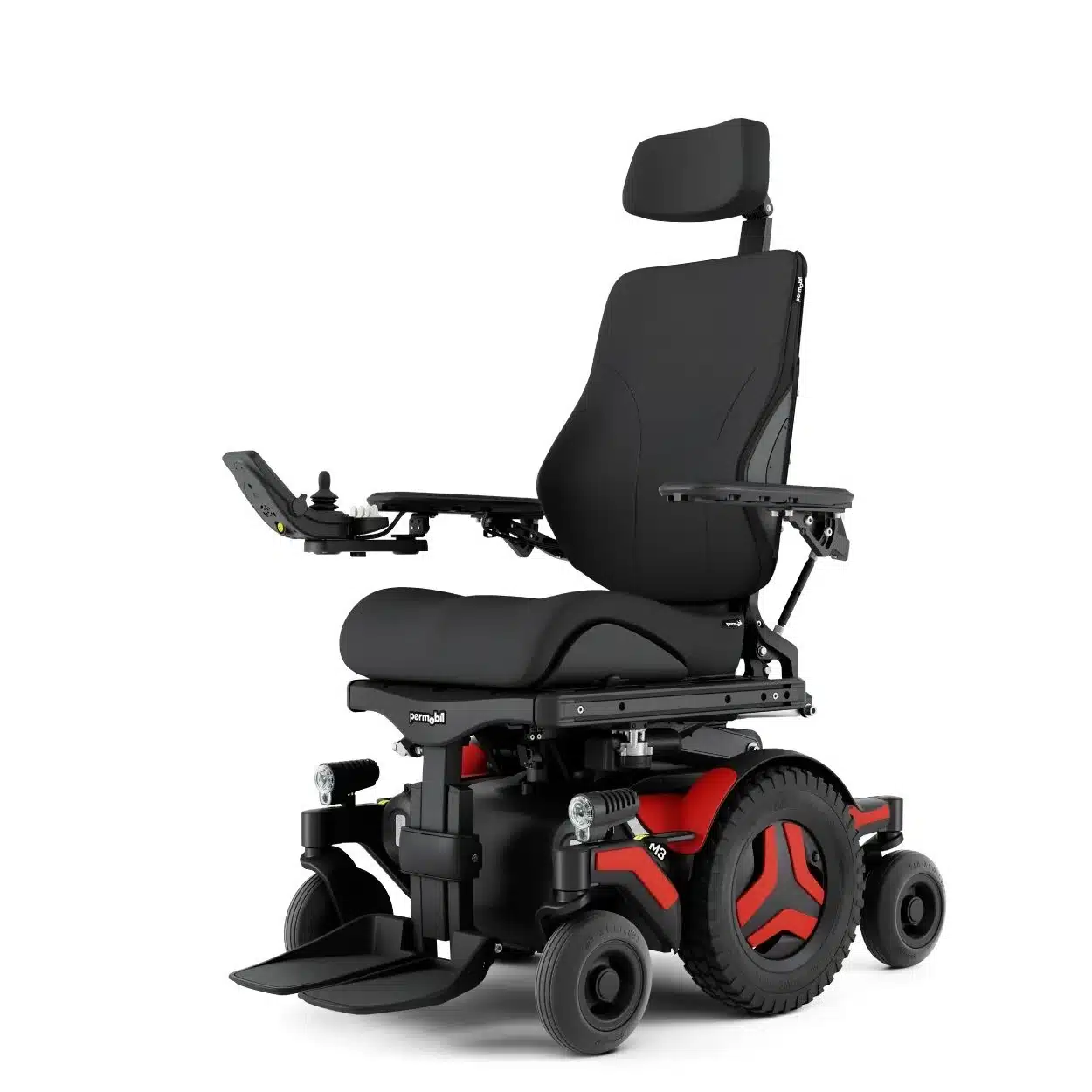
The Permobil M3 is designed for individuals who require advanced powered mobility and customized seating support. Its combination of mid-wheel-drive performance, adjustable positioning, and configurable seating options makes it a consideration for people with complex mobility requirements. However, the real value of a wheelchair depends on how effectively its features support the user’s everyday activities. Understanding these practical applications can help individuals and caregivers evaluate whether this mobility platform is appropriate for their lifestyle.
How the Permobil M3 Supports Everyday Independence
Independence does not necessarily mean completing every activity without assistance. It means having the appropriate equipment and support to make personal decisions, participate in daily routines, and complete tasks with greater control.
The Permobil M3 is a Group 3 power wheelchair that can be configured to address different mobility and positioning requirements.
1. Making Everyday Home Activities More Accessible
Home accessibility plays an important role in independent living. Narrow spaces, furniture arrangements, kitchen counters, and bathroom entrances can create challenges for wheelchair users.
A properly configured mid-wheel-drive wheelchair can help users navigate indoor environments, provided there is sufficient turning clearance and accessible space.
For example, someone preparing breakfast may need to move between the kitchen counter, dining area, and refrigerator. Having a suitable power wheelchair can make these movements more manageable without relying on manual propulsion.
Its powered seating options may also help users adjust their position to access frequently used household items.
2. Improving Reach and Functional Accessibility
Reaching objects placed at different heights can be challenging when using a conventional seating position. Powered positioning features can help address some of these limitations.
The M3 Corpus offers ActiveReach and ActiveHeight features. Depending on the configuration, ActiveReach can tilt the seat forward by up to 20 degrees, while ActiveHeight provides seat elevation.
Example: A user may need to reach a kitchen shelf, interact with a cashier, or work at a higher desk. These positioning functions can help bring the user closer to the required working height or improve functional reach.
The benefits depend on the user’s physical abilities, selected equipment, and environmental setup.
3. Supporting Participation in Social Activities
Social participation is an important part of everyday life. Visiting friends, attending family gatherings, and participating in community events should be considered when selecting a mobility device.
A power wheelchair with suitable positioning and driving controls can help users participate in these activities more comfortably.
For instance, someone attending a family dinner may benefit from appropriate seat positioning to interact with people around the table. Similarly, maneuverability can make moving through accessible community spaces more convenient.
Why Suspension and Stability Matter for Everyday Mobility
Not every journey takes place on a perfectly smooth surface. Doorway transitions, pavement joints, ramps, and small obstacles can influence the comfort and control of a powered wheelchair.
The M3 Corpus features a suspension system designed to support stability, traction, and ride comfort. Its compact mid-wheel-drive base also helps with maneuverability in tighter spaces.
However, users should understand their wheelchair’s limitations and practice navigating different surfaces safely.
For example: When moving across a small threshold, approaching it at a controlled speed and following the manufacturer’s operating guidance can help maintain a more predictable ride.
A proper assessment of the user’s regular routes is important because outdoor conditions, surface quality, and accessibility can vary significantly.
Choosing the Right Configuration for Individual Needs
Not every user requires the same wheelchair setup. Two people using the same model may have completely different seating, control, and positioning requirements.
Before selecting a Permobil power wheelchair, consider the following factors:
-
Seating requirements: Evaluate cushion selection, backrest support, seat dimensions, and positioning accessories.
-
Driving controls: Choose joystick placement and control options based on the user’s hand function and operating abilities.
-
Daily environment: Consider home layouts, workplace accessibility, outdoor routes, and transportation arrangements.
-
Positioning functions: Discuss whether tilt, recline, seat elevation, or forward reach features are appropriate.
-
Long-term requirements: Consider future adjustments and the availability of compatible accessories.
A qualified seating and mobility specialist can help determine which features are appropriate and ensure that the final configuration is properly fitted.
Is the Permobil M3 the Right Choice for Everyday Mobility?
Choosing a wheelchair requires balancing comfort, functionality, accessibility, and personal preferences. The M3 Corpus may be worth considering for individuals who need advanced powered mobility and customized seating rather than a basic mobility solution.
Its combination of seating adjustments, suspension, maneuverability, and powered positioning can support a variety of everyday activities. However, it is important to remember that a wheelchair’s suitability depends on individual clinical requirements and the environments in which it will be used.
Pro Tip: Focus on Real-Life Mobility Requirements
Before making a final decision, create a list of activities that are important to your daily routine. Include tasks such as reaching work surfaces, navigating your home, visiting public places, and traveling outdoors.
Discuss these requirements during a seating assessment or product demonstration. Testing the actual configuration can help identify whether its features provide practical benefits rather than simply meeting technical expectations.
Conclusion
A suitable power wheelchair should support more than basic movement. It should help users participate in everyday activities, access their surroundings, and maintain greater control over their routines. The Permobil M3 offers configurable seating, powered positioning, and mid-wheel-drive maneuverability that may address different mobility requirements. By evaluating its features alongside personal needs, environmental conditions, and professional recommendations, individuals can make a more informed mobility decision. Ultimately, the right wheelchair configuration should make everyday activities more accessible, comfortable, and manageable.