 By
By If you’ve never scheduled a drone roof inspection before, you might wonder what the process actually involves. Unlike a traditional inspection – where someone physically walks your roof – a drone inspection looks and feels different. Understanding what happens from start to finish helps you prepare, ask the right questions, and get maximum value from the service.
Before the Inspection: What Happens First
Professional drone roof inspection services like those provided by Skybound Views begin with a brief intake process. You’ll provide your property address, roof type, age, and any specific concerns you want documented. This information shapes the flight plan and documentation priorities.
The operator will check airspace status for your location – particularly important in urban areas or near airports. They’ll also review weather forecasts for the scheduled date. Professional operators don’t fly in conditions that compromise data quality, so understanding weather considerations upfront prevents last-minute scheduling surprises.
Day of Inspection: The Flight Operations
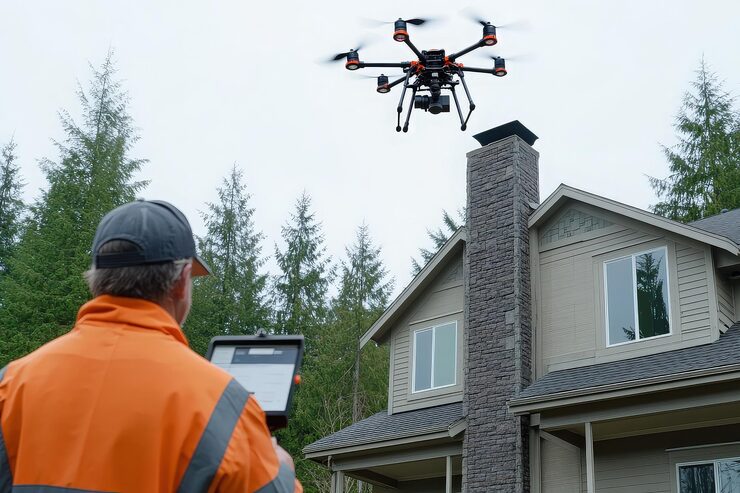
The inspection drone typically arrives with one or two operators – one to handle flight operations, one to monitor the real-time footage feed and direct documentation priorities. Setup takes approximately 15 to 30 minutes: equipment check, battery confirmation, GPS lock acquisition, and a brief pre-flight safety scan of the flight area.
The inspection flight itself is methodical rather than random. Professional operators use systematic grid patterns or orbit sequences that ensure complete roof coverage without gaps. For residential roofs, the inspection flight runs 20 to 45 minutes. Large commercial roofs may require multiple batteries and one to three hours of flight time.
What the Camera Captures During Inspection
High-resolution cameras on professional inspection drones capture imagery at resolutions capable of identifying features as small as a few millimeters from typical inspection altitudes. The operator focuses extended documentation time on areas of interest: flashing details at penetrations and valleys, ridge cap conditions, areas showing surface wear or discoloration, and any locations where previous repairs are visible.
Skybound Views inspection protocols also include structured close-up passes over all roof penetrations – chimneys, vents, skylights, HVAC equipment – where failure points are most common. These targeted documentation passes are often what reveals the developing issues that routine visual inspection misses.
Thermal Imaging: When It Adds Value
Thermal cameras detect temperature differentials invisible to standard cameras. For roof inspections, this means identifying areas where moisture has been absorbed into the roof assembly – wet materials retain heat differently than dry ones, showing as distinct temperature anomalies on thermal imagery.
Thermal inspection is most valuable for commercial flat and low-slope roofs, where water infiltration and ponding concerns are most common. Skybound Views offers thermal imaging as an upgrade to standard visual drone roof inspection services, and recommends it for any commercial property owner managing significant roof assets.
After the Inspection: The Report
The deliverable that makes a drone inspection genuinely useful is the report. A professional inspection report includes georeferenced aerial imagery with annotation identifying observed conditions, area-specific condition ratings, locations of specific concerns plotted on a roof plan, and prioritized recommendations.
This isn’t just a collection of photos – it’s a documented assessment that can be shared directly with roofing contractors for repair bidding, submitted to insurance for claim documentation, or filed in your property management records for ongoing reference.
Using Your Inspection Report Effectively
The roof inspection report is most valuable when it’s actually used. Share it with multiple roofing contractors when soliciting repair bids – having objective documentation prevents inflated estimates based on guesswork about undocumented conditions. Reference it when renewing property insurance. File it as a baseline document for future comparative inspections.
Sequential inspections – comparing annual or biannual reports – reveal deterioration trends that single-point inspection can’t identify. Skybound Views maintains client inspection histories to support this kind of longitudinal assessment.
Conclusion
Understanding the drone roof inspection process makes it easier to prepare, participate, and get maximum value from the service. Skybound Views delivers inspection programs designed around what property owners actually need – not just technical compliance but actionable intelligence that protects your investment. Schedule your inspection before the next storm season makes you wish you had.